Clean Water’s Toxics Program is grounded in common sense. If you make things with sustainability and safety in mind from the start, you don’t contaminate the environment or harm the people using or making those things. This approach also avoids the exorbitant costs of healthcare, water treatment, or environmental cleanup.
Over the years Clean Water has won remarkable victories restricting the bad while encouraging greener economic innovation. As a result, we’ve helped protect our water, consumers, workers, and those most vulnerable to exposure. These successes have included regulating toxic chemicals like perchlorate and hexavalent chromium in drinking water, banning toxics like PFAS "forever chemicals" in products, obtaining state recognition of subsistence fishing and tribal cultural uses to drive more comprehensive water pollution clean-up plans, and shining light on chemical exposures by passing policies requiring disclosure of PFAS in water and hazardous substances in products.
Protecting Community Health
This year, the state concluded a ground-breaking monitoring program for PFAS in small, disadvantaged communities. Clean Water Action’s advocacy created the funding for this innovative program, while Clean Water Fund’s outreach and education efforts helped recruit systems to participate. Free testing was provided for 3,442 wells, expanding our understanding of California’s PFAS crisis. We also expanded our coalition efforts in 2026 by partnering with Children Now to educate and engage parents, educators, health officials and others concerned about children’s health and the environment. We hosted three webinars on how water is regulated, the benefits of tap water over bottled, ways to avoid PFAS exposures, and protecting children from lead. This relationship will be key in bringing new and compelling voices to our work moving forward, and we’re looking forward to continuing the series next year.
Dangers of Large-scale AI Data Centers
Our program must always be ready to address emerging issues, even while we keep import long-term concerns in view. As the lead for Clean Water Action’s Toxics Program in California, I’ve been following how communities around the state are looking at data centers to generate revenue. We’ve heard so much about the energy and water needs of these facilities, but I’ve been struck by the lack of discussion about toxic chemicals expelled from them, including PFAS.
Data centers and their equipment can become extremely hot and must be cooled down, often using vast amounts of high-quality water. Given the obvious concern about the use of precious water supplies for cooling, companies like PFAS-manufacturer Chemours has seen an opportunity to make up ground they’ve lost from PFAS restrictions. Their answer has been to make coolants with PFAS, which will continue to harm communities where the chemicals are made, be released into our environment through leaching and evaporation from the data centers, and end up as a waste product that can contaminate the very water we’re trying to conserve.

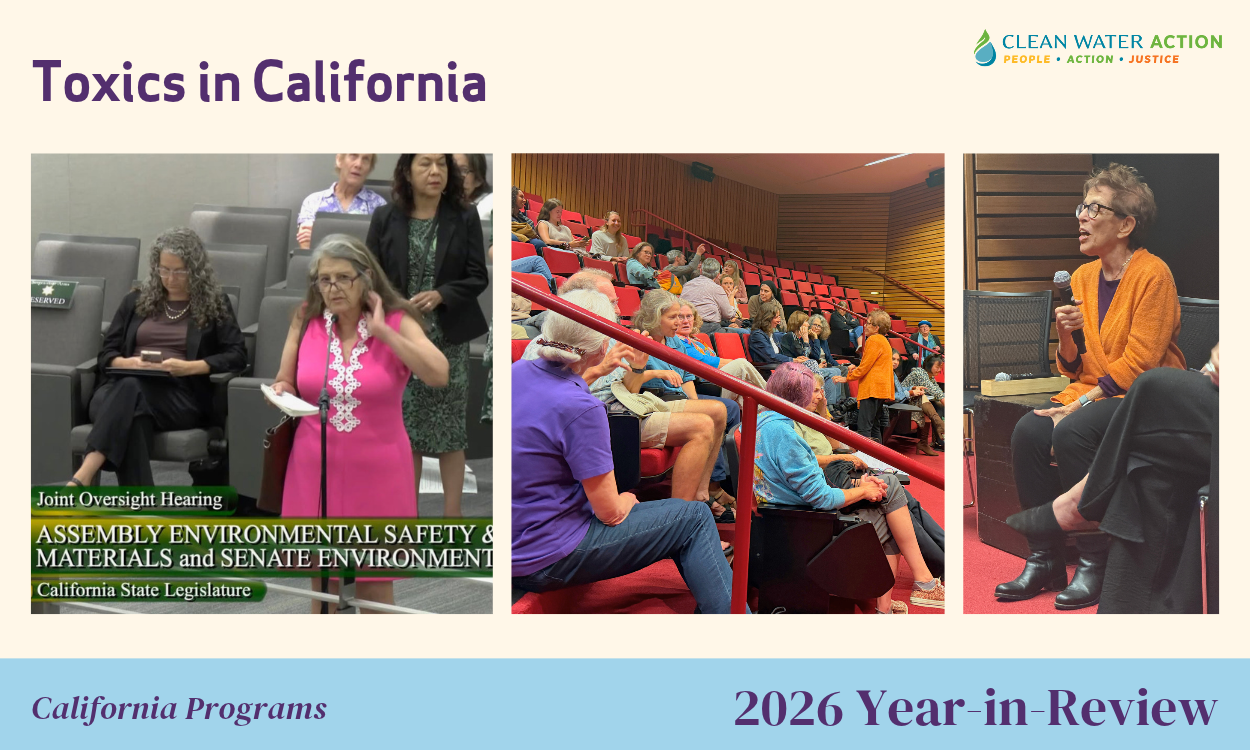
in San Jose on October 30, 2026.
Clean Water Action is working to bring this concern to the media, other advocates working in the data center arena, state and local decision makers, and the general public. This year we’ve expanded our California PFAS workgroup to include environmental advocates in the tech sector, been cited in media outlets on the issue of PFAS and water, and were recently invited to share our expertise on the issue at a data center summit in the heart of Silicon Valley. It’s just the beginning of this new, but key avenue of work that complements our other efforts. It must be done, and we’re ready to rise to the occasion.
Looking to the Future
Clean Water Action continues to stay the course in both stopping pollution at the source and addressing the harm that has already been done. With new leadership at the state and national levels, we are anticipating great opportunities to continue this work. We will be advocating for the strongest regulations for PFAS in drinking water, some of which should be proposed by state regulators in early 2027. We will be promoting policies to further restrict the use of PFAS in products, as well as tackling microplastics in household goods through legislative and regulatory processes. And we’ll be pushing for state scientists to identify guidelines for consumption of fish from PFAS contaminated waters to protect subsistence fishers and tribes.
None of this work can happen overnight, and we need your support today to make sure we can keep going in 2027 – and beyond. We can't do this without you. Make a special gift to Clean Water Action in California.
After all, there are two things that sustain our communities and our future: hope and hard work. We’re on it!


