ADVOCATES SECURE EXPANSION OF SEWAGE BACKUP ASSISTANCE PROGRAM, RAIN OR SHINE
Baltimore City extends program eligibility to cover more sewage backups and help more residents after years of community frustration
Today, environmental and public health advocates are celebrating the expansion of Baltimore City’s sewage backup assistance program, which will now offer direct cleanup assistance to more households than ever before. Just prior to an investigational hearing called by Baltimore City Councilmember Paris Gray (District 8), Mayor Brandon Scott and Department of Public Works Director Matt Garbark announced that all sewage backups caused by City-owned infrastructure would be eligible for the newly-expanded Sewage Onsite Support cleanup assistance program - rain or shine.
This marks a significant change in the program’s eligibility criteria: previously, only backups caused by heavy rainfall were covered under the program, which left thousands of Baltimore City residents to deal with costly and dangerous sewage backups on their own, even if they originated in the City’s pipes.
Sewage backups are a big problem in Baltimore City. When sewer mainline blockages occur, or when heavy rain overwhelms Baltimore’s aging pipes, sewage has no place to go but up and out into people’s basement floor drains, toilets, showers, and washing machines. These backups happen thousands of times each year and put residents’ health, homes, and livelihoods at risk.
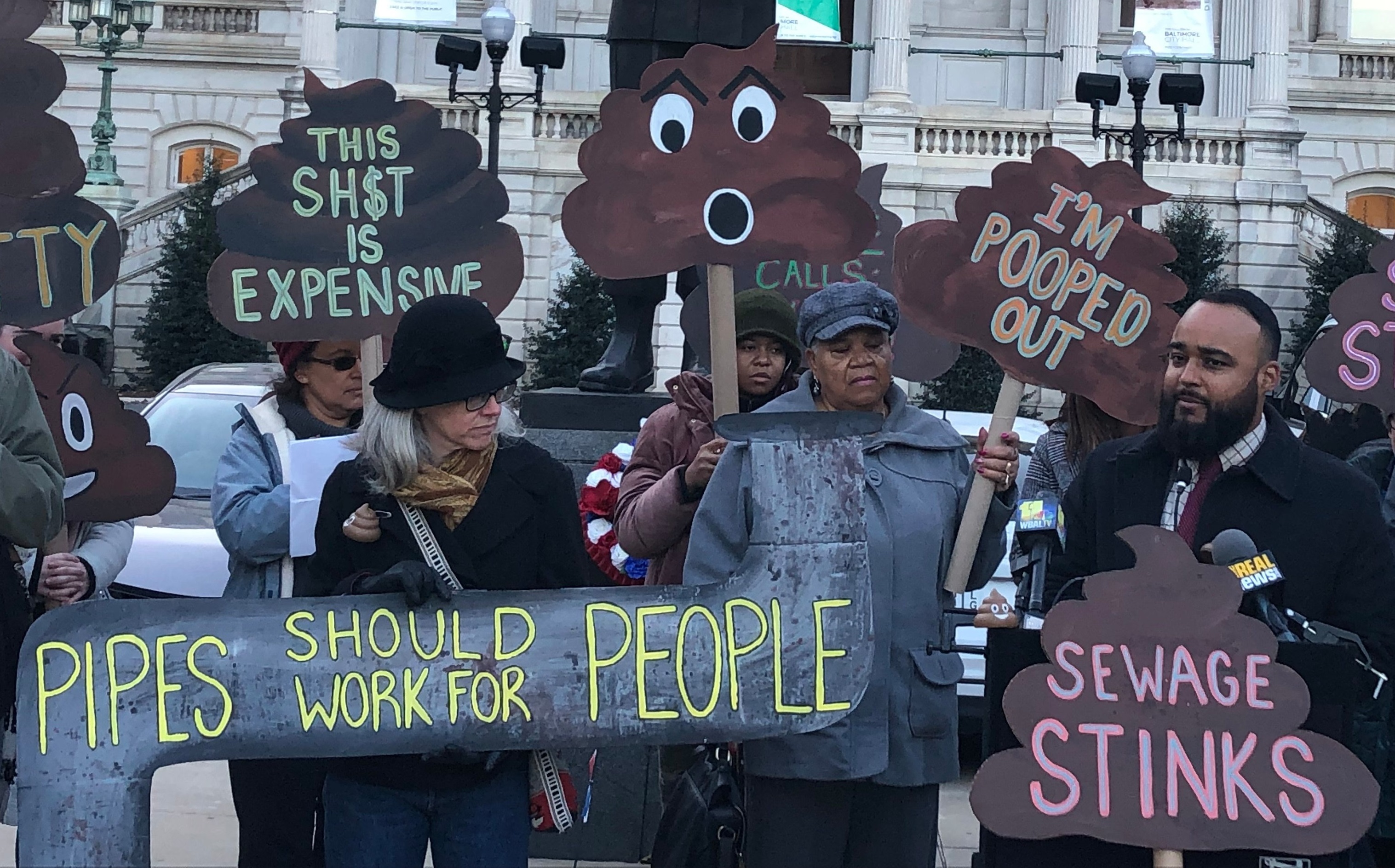
The policy shift comes after more than eight years of advocacy and community members speaking out about the City’s failure to adequately promote and operate several versions of the sewage backup assistance program required under the Modified Consent Decree for Sewage Overflows. In 2016 and for years before, community associations and residents across the city spoke out demanding assistance with sewage backups. In 2019 and at many hearings since then, community leaders spoke out at City Hall calling for improvements to the City’s then-failing Expedited Reimbursement Program. In 2022, advocacy groups published a report, “Expanding Baltimore City’s Sewage Backups Programs,” calling for the change announced by the Department of Public Works today.
“This program expansion is a huge win for every person in Baltimore City who has ever experienced a sewage backup through no fault of their own,” said Alice Volpitta, Baltimore Harbor Waterkeeper with Blue Water Baltimore. “Now, the City must follow through and promote the program far and wide - on TV, in newspapers, social media, newsletters, and water bill inserts.”
“Community leaders have been calling out for this change for over a decade,” said Jennifer Kunze, Maryland Co-Director of Clean Water Action. “The bravery of City residents willing to relive their traumatic stories of sewage backups and bring the human cost of these stories to light in City Hall and in the press made this victory possible.”
“We applaud Mayor Scott and Baltimore's Department of Public Works for this important and long-needed decision,” said Leah Kelly, Senior Attorney with the Environmental Integrity Project. “Baltimore residents facing the nightmare of basement sewage backups caused by city infrastructure should not be left alone to deal with the cleanup. The program expansion announced today makes it less likely that they will be.”
"Today is a win for Baltimore communities! No family should ever have to deal with a sewage backup in their basement due to City failing infrastructure and wondering who will help. I am deeply grateful to the advocates, neighbors, and community leaders who refused to let this issue go. They showed up at hearings, shared their stories, stood with us for years, and this expansion is a direct result of their persistence. Behind every one of those stories is a family who walked into a basement they couldn’t recognize and didn’t know where to turn. I also want to thank my predecessor, Councilman Kristerfer Burnett, whose leadership laid the foundation for this work, and the team at DPW and Mayor Scott for partnering with us to get it done. When city infrastructure fails, DPW will do the right thing and stand with the residents affected, rain or shine. Because of the people I’m thanking today, Baltimore families have a safer, cleaner city and somewhere to turn when they need it most." -Councilman Paris Gray, District 8
"A sewage backup is not just a plumbing problem, it is a public health and quality of life issue that often lands hardest on families who cannot afford to fix it on their own,” said Baltimore City Councilwoman Phylicia Porter (District 10), Chair of the Public Health & Environment Committee. “With this expansion of the SOS Cleanup Program, whether a backup occurs after a storm or on a dry day, eligible homeowners and renters can now receive professional cleanup services at no cost when the blockage is on the City-owned side. This is what community-centered governance looks like, and I am grateful to Mayor Scott, Councilman Paris Gray, Director Garbark, DPW, and the community advocates who helped close this gap. If you experience a backup, call 311. Help is available, rain or shine."
Background
Baltimore City is under a federal consent decree to reduce sewage overflows into our waterways. But as the City works to close sewage outflow points into our streams and Harbor, it’s putting more pressure on certain parts of our sewer system. For thousands of Baltimoreans, that means raw sewage backing up into their basements. To access direct cleanup assistance through the now-expanded Sewage Onsite Support program, Baltimore City residents must call 311 to report their sewage backup, at which time they should be offered direct cleanup assistance at no cost if the backup is determined to have been caused by City-owned pipe infrastructure.