
What are data centers?
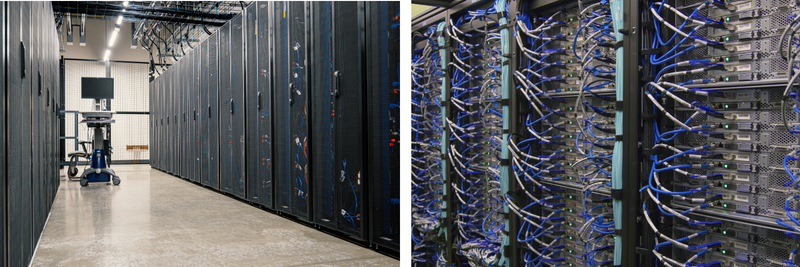
A data center is a physical room, building, or facility that houses computing resources for online services, cloud computing, and increasingly for artificial intelligence (AI) hyperscale infrastructure. It also stores and manages the data associated with those applications and services.
While data centers are not new, they've evolved from private facilities used by one company into massive developments – often multiple buildings – serving many different companies. Increasing demand for data storage and computing power, along with the rapid growth in artificial intelligence development, has led to new data center development across the country, including massive “AI hyperscale” facilities. The average data center size is 100,000 square feet, but they can exceed 1 million square feet.1 For comparison, the average Costco is 140,000 square feet.2
Why are there so many new concerns about data centers?
Increasing concerns about data centers are driven by multiple factors, including:
- their massive size and equally massive impact on local resources,
- the high number of data centers being proposed in communities lacking the resources to push back,
- the expectation/likelihood of widespread expansion across the entire country rather than concentrated in a few key areas, and
- the sheer number of newly-proposed and completed facilities — there were nearly 4,000 data centers in the United States as of early 2026, 37% of the world’s total.4
Residents living around proposed and existing data centers often express concerns about water use in already-strained areas, significantly increased load on the electrical grid and resulting rate increases, various kinds of pollution like water and noise pollution, and a lack of transparency or even intentional secrecy around these projects.
As more data centers are proposed and built all across the country, we're hearing more and more community voices speaking up with these same concerns.
What are the environmental and health impacts of data centers?
Water Use and Impacts

uncontrolled water use from natural resources.
AI hyperscale data centers use enormous amounts of water for cooling towers, chillers, heat exchangers, and humidification systems that are used to cool the facilities and prevent servers and IT equipment from overheating. Depending on the type of cooling system used, data centers can consume millions of gallons of water each day, primarily sourced from municipal water, wells, and recycled or reclaimed water. Water is also used indirectly by the facilities' electricity infrastructure.
While progress is being made in reusing water within the facility, some level of water consumption will always be necessary to operate data centers. This can lead to increased stress on local water systems, which is particularly serious in regions already experiencing water stress from drought or other factors.
There are also water pollution concerns around data centers. Like any industrial process, water being used in data centers will ultimately be discharged either directly into a river, lake, or other water body or into a Publicly-Owned Treatment Works (POTW) or local sewage treatment plant. Industrial wastewater from data centers can contain harmful chemicals and pollutants like anti-corrosion chemicals5 and PFAS chemicals from the use of F-gases in cooling systems.6 Any pollutants discharged into a body of water can threaten downstream water quality and make it unsuitable for swimming, fishing, or drinking by residents and wildlife. Increased chemical levels in water can also mean more intensive and complex treatments for drinking water and sewage facilities, and that hefty price tag is usually passed on to consumers.
Electricity and Climate Change
Data centers require massive amounts of electricity to keep thousands or hundreds of thousands of computer servers running (and cooled!) 24/7. This can put a huge strain on local electricity grids, causing supply and cost increases for local residents and businesses. Whether using local sources or providing their own sources of power, increased electricity usage can lead to climate impacts and pollution threats. While renewable energy is increasing in the U.S., there is still reliance on fossil fuel sources, particularly natural gas. Some data centers are installing their own power sources, including outdated natural gas turbines and even keeping coal plants open to run these facilities. This will increase global warming pollution and lead to increased climate change impacts — in addition to the air and water pollution generated by the fossil fuel sources themselves.
What are Clean Water Action and Clean Water Fund doing?
We're pushing back against reckless data center development in states all across the country — from Minnesota to Pennsylvania to Texas and beyond. We're taking action by:
- Supporting community efforts to oppose unsustainable practices and push for transparency and accountability.
- Advocating for local, state and national approaches to get the information, transparency and accountability needed to protect people, wildlife, natural resources.
- Working with allies and experts in diverse fields to understand the full scope of impacts including air and water quality, water supply for drinking water and farmers, and energy infrastructure.
- Putting our policy expertise to work to develop concrete, actionable recommendations for local, state and federal governments to address reckless development.
Here are some examples of recommendations we're giving to agencies and legislatures.
- Require all data centers to recycle cooling water before discharge. Require onsite water treatment prior to discharge directly into water or into sewage treatment systems.
- Require onsite carbon-free energy production to prevent stress on the electrical grid and ensure affordable energy bills for local residents.
- Require facilities to track and monitor water and energy usage to minimize overall strain on existing infrastructure and resources as well as to reduce environmental impacts, and to optimize their systems for maximum efficiency.
- Require increased transparency, public disclosures prior to approvals, and public reporting.
- Enact local, state, or federal moratoriums to ensure the full impact of data centers can be more thoroughly assessed, and that clear health, environmental, and safety-based protections are put in place.
