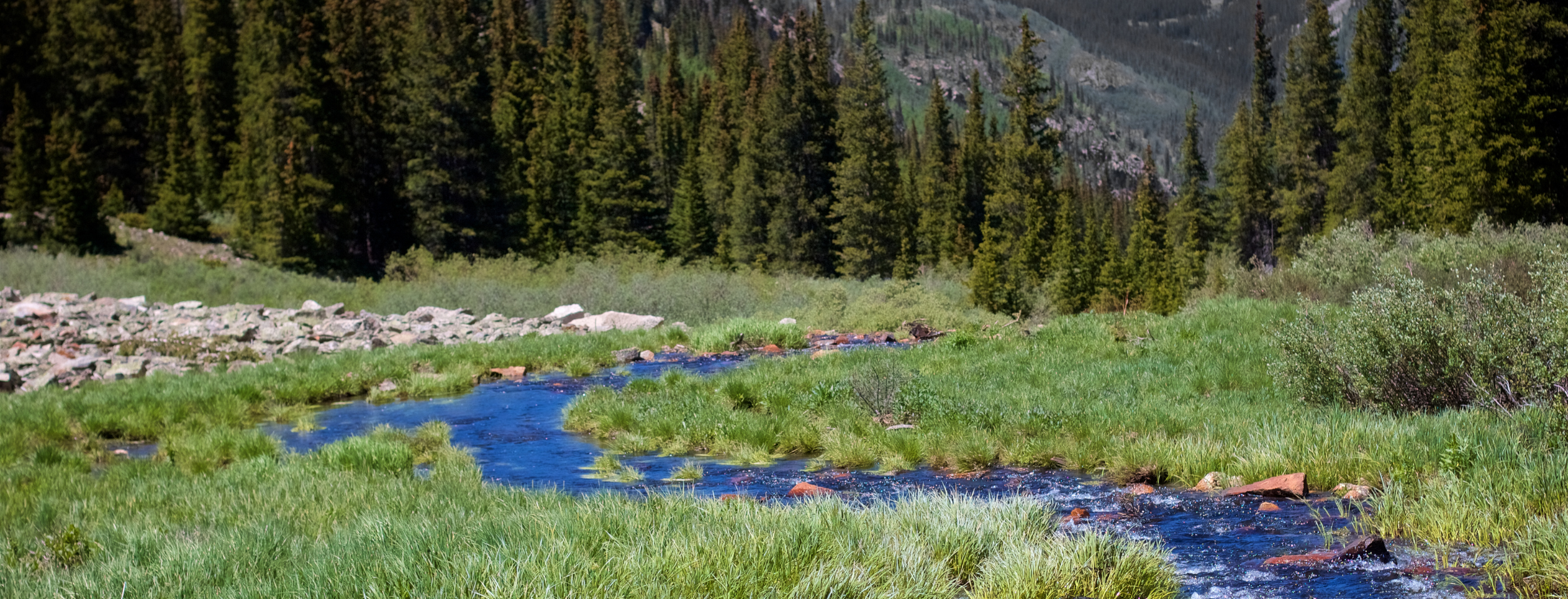
In December, Colorado became the first state to restore safeguards for small streams and wetlands after the 2023 Sackett v. EPA Supreme Court decision stripped these vital waters of federal protections. While these rules do not contain every provision Clean Water Action and the Protect Colorado Waters Coalition advocated for, they are a critical first step toward better protecting our state waters.
Regulation 87, approved by the Water Quality Control Commission after a three-day rulemaking hearing, requires development, mining, and other construction projects to first go through an environmental review process to ensure state waters are adequately protected. In cases where a project will destroy a stream or wetland, compensatory mitigation is required to restore all lost ecological functions.
Throughout the rulemaking process, mining and development interests fought to weaken the state program. The final regulation included some compromises but also retained key language to ensure broad protections for Colorado waters.
Strong provisions secured by Protect Colorado Waters Coalition included:
- Removal of language that could have restricted the scope of state waters covered by the program. This was important to secure as the federal government continues to propose to further narrow federal protections for streams and wetlands. It ensures Colorado can protect any additional waters that may lose federal protections in the future.
- Language to ensure the defined purpose of a project cannot be so narrow as to prevent considering a reasonable range of alternatives. It is critical for project proponents to consider a range of options to find one that fulfills the project need and is the least environmentally damaging.
- Removal of language that would have codified the idea that ephemeral streams (precipitation dependent streams) have less ecological importance and need less mitigation. Ephemeral streams are just as ecologically important as perennial or intermittent streams and deserve the same rigor of protections.
Industry also sought to remove key definitions for the terms “adjacent” and “supported by,” which would have left thousands of acres of wetlands near ditches at risk of being destroyed. The Commission adopted a sensible compromise that ensures vast acres of wetlands are not left unprotected but rejected our proposal to protect even more wetlands.
Our most disappointing loss was that the Commission caved to industry interests and removed a key provision from the rules that would have required a public interest review, something the Army Corps of Engineers is required to do before issuing a Clean Water Act Section 404 permit. During a public interest review, environmental and community impacts of a project are viewed broadly to ensure permitted projects are in the public interest. Instead, the state will only be required to consider impacts on water quality and aquatic resources when deciding whether to permit a particular project.
Though the final regulation was not as robust as we would have liked, thousands of stream miles and vast acres of wetlands in Colorado are now better protected from development, mining, and construction activities.


