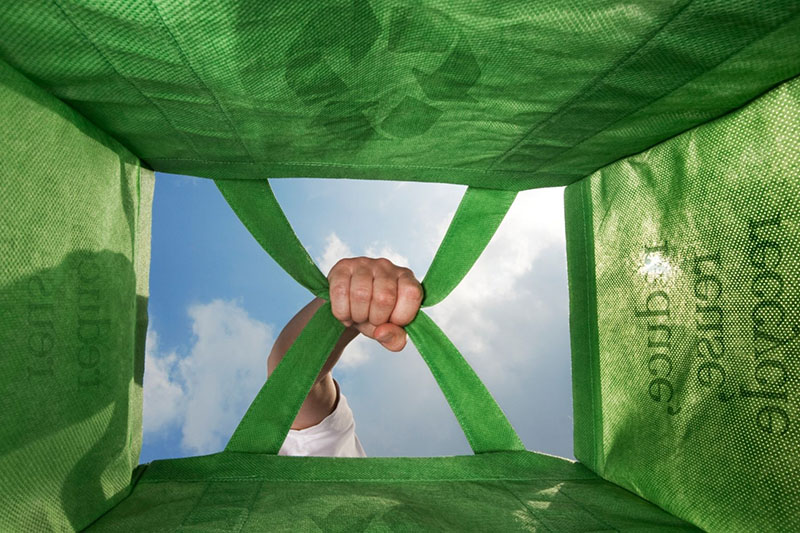
November 13, 2025, marked the final chapter in a long and hard-fought effort within Philadelphia City Government to reduce litter, cut single-use plastic waste, and incentivize shoppers to bring their own reusable bags. That moment capped a journey that began in the mid-2010s and reached an early milestone in 2019, when Philadelphia City Council passed legislation banning single-use plastic bags.
Several years later, the City released a study evaluating the policy’s effectiveness. The results were mixed: plastic bag use at traditional supermarkets dropped by an impressive 92 percent, but paper bag use tripled. The shift simply replaced one waste stream with another.
To address this unintended consequence and better encourage reusable bags, Clean Water Action helped author legislation to amend the original law by requiring merchants to charge a minimum 10-cent fee on paper bags used to package groceries and other consumer goods. In December 2023, Philadelphia City Council passed the amendment by an 11-2 vote. Unfortunately, then-Mayor Jim Kenney left the bill unsigned as he exited office, resulting in a “pocket veto” that killed the legislation.
The BYOBag Bill Returns
In 2025, City Councilmember Mark Squilla reintroduced the Bring Your Own Bag (BYOBag) legislation as Bill No. 250733. For the second time in as many years, the Philadelphia City Council approved a bill designed to encourage shoppers to use reusable bags and reduce reliance on single-use paper bags, this time by a 10–5 vote.
Ahead of the vote, we secured 11 sponsors and expected an additional “yes” vote from Councilmember Anthony Phillips, who had confirmed his support in an email. That would have given the bill a veto-proof majority of 12 votes.
However, when the final vote was taken, Councilmembers Quetcy Lozada, despite being a co-sponsor, and Phillips both reneged on their committments and reversed course, leaving the bill two votes short of veto-proof passage.
After the vote was taken, Councilmember Phillips explained he had “come in ready to vote yes”, but that morning he had heard “over and over the Federal Government was going to take SNAP Benefits away.” He said it would be helpful to create “another initiative to support the funding of reusable bags that we give away,” but that it was otherwise just not the right time, given inflation and the danger of SNAP benefits being cut, to “add more worry and trouble to Philadelphians” by adding a fee to paper bags.
These defections became critically important when Mayor Cherelle Parker informed Councilmember Squilla that she intended to veto the bill.
Administration Concerns and Our Response
Testifying on behalf of the Parker administration, Deputy Managing Director Carlton Williams expressed the administration's support for the provisions that clarified the definition of plastic and the benefits of the bill to “further Philadelphia’s commitment to environmental sustainability” by reducing the ”environmental impact of paper bags," acknowledging the effect of the fee to support behavioral change.
However, the administration raised concerns about potential impacts on “mom and pop” businesses, suggesting the fee could push shoppers, and stores, outside city limits to avoid added costs. The administration also argued that, despite good intentions, the policy could disproportionately affect low-income Philadelphians, particularly communities of color and residents who use SNAP or WIC benefits to pay for groceries, especially given the current economy.
Clean Water Action and our community partners strongly disagreed. These concerns are not supported by Philadelphia’s experience or by evidence from other cities with similar policies.
Bag Fees Are About Fairness, Not Punishment
Carryout bags--plastic or paper--are not free. Before the plastic bag ban, Philadelphia-area merchants spent roughly $20 million annually on plastic bags, passing those costs along to consumers through higher prices. Replacing plastic with paper bags increased annual costs by an estimated $40-60 million.
Without a fee, everyone subsidizes single-use bags, whether they use them or not. A bag fee corrects that imbalance: those who bring reusable bags pay nothing; those who choose single-use bags cover the cost.
A 10-cent paper bag fee does not harm the broader economy. Merchants, including small businesses, use the fee to offset bag costs. Studies consistently show no loss of sales or customer flight to stores without bag fees. The primary impact is behavioral change, not economic harm.
Many small stores, including those serving Philadelphia's low-income and black and brown neighborhoods, still use plastic bags because paper bags cost more than twice as much. Enforcing the plastic bag ban would unduly impact these stores and force them to raise prices for Philadelphia's poorest residents. A minimum fee on plastic and paper bags levels the playing field, taking the burden off small store owners who give away bags at their own expense.
The 10-cent bag fees will NOT disproportionately impact low-income Philadelphians. In fact, vigorous enforcement of the current plastic bag ban would have a disproportionate impact, particularly in low-income communities of color. The 10-cent bag fee, combined with a reusable bag program that ensures all residents have access to reusable bags, regardless of income, will advance equity and sustainability goals.
Clean Water Action's research found that most analyses of bag fees and the poor begin with the assumption that such fees would have inequitable effects, imposing a disproportionate economic burden on low-income residents, without considering the actual shopping experiences in low-income communities.
What the Research Shows
The most comprehensive analysis of bag fees and equity comes from a December 2020 memo by the Duke University Environmental Law & Policy Clinic, prepared for Don’t Waste Durham. The memo reviews policies across the U.S. and offers recommendations to minimize equity impacts and promote environmental justice.
While the memo suggests exemptions or free reusable bags for low-income shoppers, evidence shows that broad exemptions increase food costs and litter in underserved communities unless reusable bags are widely available at no cost.
Three key findings support this:
- Eliminating bag fees at discount grocery stores increases food prices.
- Corner stores, common in low-income neighborhoods, bear the greatest burden when bags are free.
- Urban neighborhoods adopt reusable bags faster than suburban areas.
Philadelphia has 29 discount supermarkets and roughly 1,500 small food retailers, corner stores, bodegas, grocers, and convenience stores, many located near residents earning under $35,000 annually. These stores keep prices low by charging for bags and requiring customers to bag their own groceries, a practice in place since plastic bags were introduced in 1989.
Studies confirm the affordability of these stores. A 2019 survey by Cheapism found Aldi prices 14 percent lower than Walmart and 24 percent lower than Kroger. A 2023 Philadelphia Inquirer analysis found discount store prices 33–40 percent below the average price of goods across almost two dozen regional stores.
Exempting SNAP or WIC shoppers from bag fees would force these stores to raise prices to cover “free” bags, undermining affordability for everyone.
Corner stores, bodegas, grocers, and convenience stores will be hit the hardest without bag fees. The merchandise cost in these stores is significantly more than in traditional supermarkets. Still, it offers the convenience of a local store and, in some cases, the neighborhood's only shopping option. This is particularly true in Southwest Philadelphia.
The sheer number of these stores, mostly locally owned, makes them a valuable and significant local business sector in Philadelphia's black and brown communities.
Under Philadelphia's 2019 plastic bag ban alone, the alternative paper bag costs more than twice as much. If laws require these bags to be distributed for free, the additional cost will be offset by merchants raising grocery prices. The same will be true of giving out free reusable bags that are 10 to 15 times as expensive as paper bags. Those small stores that choose to ignore the ban face fines of $175.00 per incident, a considerable deterrent if enforced.
Furthermore, exempting low-income shoppers from bag fees ultimately limits the positive impacts of reducing plastic bags, including the environmental benefits enjoyed by wealthier, less diverse communities. This is counter to the intent of the exemption.
Distribution of free reusable bags must account for the widespread availability and ownership of such bags, particularly since the ban on plastic bags in Philadelphia and on all single-use bags in neighboring New Jersey. Reports from some sectors and households indicate that reusable bags are so plentiful that they are discarded as litter or trash. Any giveaway program should be matched with a reusable bag donor program to avoid this unintended consequence.
Reusable Bags Work - Especially in Cities
Research from Chicago and Philadelphia shows that low-income urban residents are more likely to use reusable bags, or no bags at all, than suburban shoppers. In the absence of a car, a reusable bag has up to three times the volume of a paper bag and is more durable for trips, walking home, taking the bus, or ride-sharing, particularly in wet weather.
In addition, these studies indicate that reusable carryout bags were three times more prevalent in underserved areas in both cities before laws banning or imposing fees on single-use plastic bags. Reusable bag use in Chicago jumped from 13 percent to 33 percent after the fees were implemented--an increase of 20 percentage points. Furthermore, the percentage of customers choosing not to use any bag at all in Chicago stores after fees were implemented increased from just under 8 percent to 21.5 percent.
Despite this, policymakers too often underestimate low-income residents’ understanding that a one-time reusable bag purchase quickly pays for itself.
A Win for Philadelphia
Ultimately, the message resonated. Rather than vetoing BYOBag Bill No. 250733, Mayor Parker allowed it to become law without her signature.
Through collaboration, persistence, and a commitment to equity, Philadelphia has taken another important step toward sustainability--making Bring Your Own Bag policies work without burdening low-income residents, small businesses, or taxpayers.
This victory reflects what’s possible when environmental protection and social justice move forward together, in service of our city and the people who call it home.


