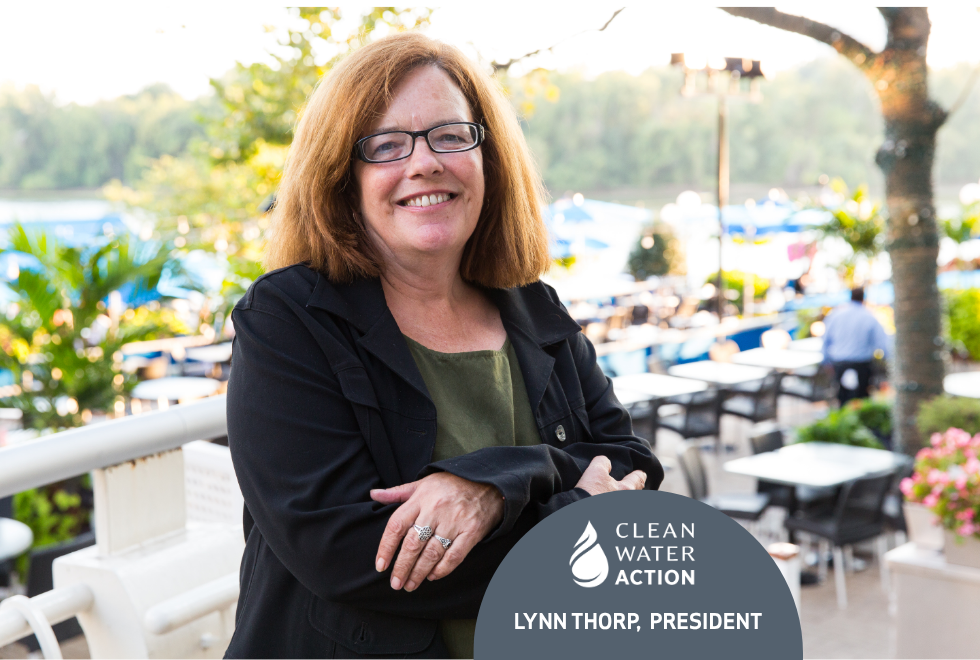
As I adjust to my new role as President of Clean Water Action and Clean Water Fund, I’ve been asked to reflect on my journey. A recurring question has been which projects or campaigns have inspired you most over the years? That’s a hard one to answer, because I have had the privilege of collaborating on many issues with staff throughout the organization, and it’s hard to pick a favorite.
A broad body of rewarding work has been building our campaigns to defend and strengthen the Clean Water Act’s water pollution programs with an emphasis on protecting sources of drinking water. It would be reasonable to think that water pollution programs make drinking water impact a primary concern, but it doesn’t always work out that way. A decade of work on Safe Drinking Water Act programs — which are primarily about what public water systems deliver to consumers — made me realize that we often have to solve contamination problems in the drinking water treatment plant when they could be addressed upstream, where the pollution starts.
A good example is water pollution from plants that burn coal to produce electricity. In 2012, we engaged in the Environmental Protection Agency’s (EPA) rulemaking process to update woefully out-of-date pollution limits for wastewater discharges from these plants. We discovered that not only was this pollution problematic for water quality overall, but the list of pollutants was a hit parade of drinking water concerns: arsenic, other metals, nutrients, bromide, and more. Partnering with allies for several years on this process, we crafted our public messages around these drinking water impacts. We pushed EPA to include more specific analysis of the costs and impacts of this pollution on drinking water systems and their consumers.
It was during our efforts on coal plant water pollution that we began a journey of creative collaboration with the drinking water sector, including drinking water system associations, drinking water utilities, and researchers. We found that while we do not always agree on everything, there is plenty of common ground in keeping contaminants out of drinking water. We also found that when we spoke together, people noticed it had an impact.
We have seen this pattern in every Clean Water Act issue over the years. People relate to drinking water, so connecting pollution reduction to those very real impacts has helped us make the case for stronger pollution limits so that burden is not passed downstream. Our experiences led us to create our "Putting Drinking Water First" concept, which means not just protecting drinking water but making the case for drinking water in order to secure much broader benefits. When we protect drinking water, we also end up with cleaner water quality overall, cleaner air, healthier people, and stronger local economies. (You can check out our Putting Drinking Water First white paper series here.)
That same kind of creative teamwork among a wide range of organizations and entities to achieve a common purpose is at the heart of the Source Water Collaborative, which we helped found in 2006. The Collaborative brings together over 30 organizations and agencies from the environmental community, the drinking water sector, government, and others to elevate the need to better protect drinking water sources. For the last four years, I served as a Co-chair of the Collaborative, another rewarding experience.
Defending and re-invigorating the Clean Water Act is especially meaningful because it is the landmark law that led to Clean Water Action’s founding in 1972. That work is never done. Right now, we are defending the Act’s water pollution programs against unprecedented and constant attacks from the current administration and from the U.S. Congress. But we’re not just in a defensive position. We are using our 2024 Using Clean Water Act Discharge Permits to Protect Drinking Water Sources to help people influence water pollution permits that impact their community and their drinking water. We are investigating less-understood sources of “forever chemical” PFAS pollution that can threaten water quality and drinking water — for example, from the semi-conductor manufacturing industry. I’m proud to have played a part in all of our work in this area and to be leading Clean Water Action at this pivotal time.
This is the second blog in a series of three in which Clean Water Action's President Lynn Thorp will reflect on her experience at Clean Water Action in the organization's 54th year.
Read Blog 1 - Clean Water Action Then and Now: A Journey from Drinking Water Coordinator to President