Redwood Materials
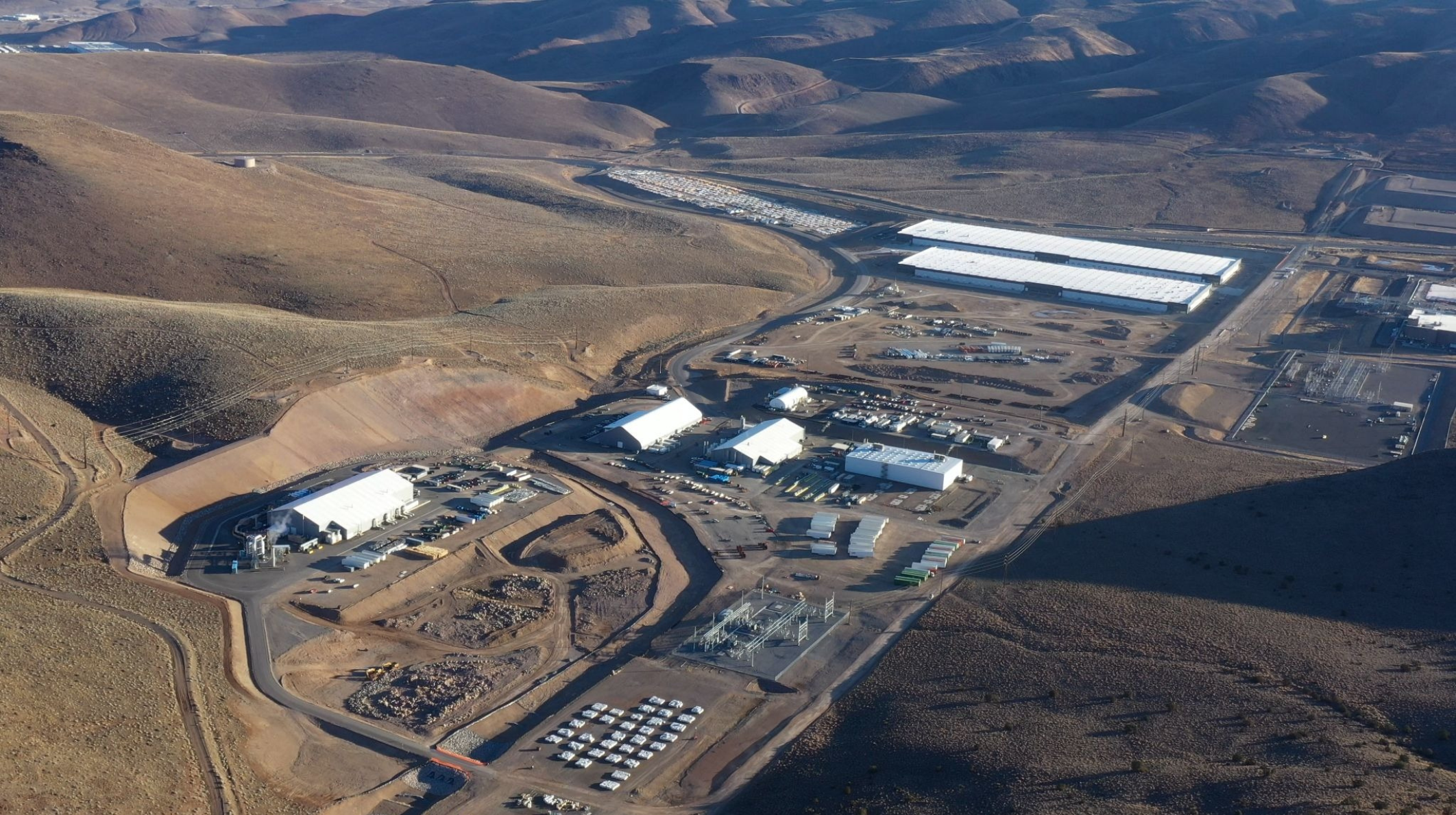
With its headquarters in Carson City, Nevada, Redwood Materials boasts a 70% market share of lithium ion battery recycling in the United States. Their main processing facility located in Sparks, Nevada has been in operation since only 2023. Redwood Materials’ business model goes beyond the collection and recycling of lithium ion batteries; with their new venture Redwood Energy, the company is also addressing the electricity storage needs of the renewable energy transition. At their Sparks facility they have created and now operate the world's largest microgrid. Powered by 30,000 (12Mw A/C) solar panels, 63 megawatt hours are stored using batteries from 5 different models of electric vehicles (EVs). Using this micro grid, they are able to sell energy to Crusoe, who runs an AI data center onsite.
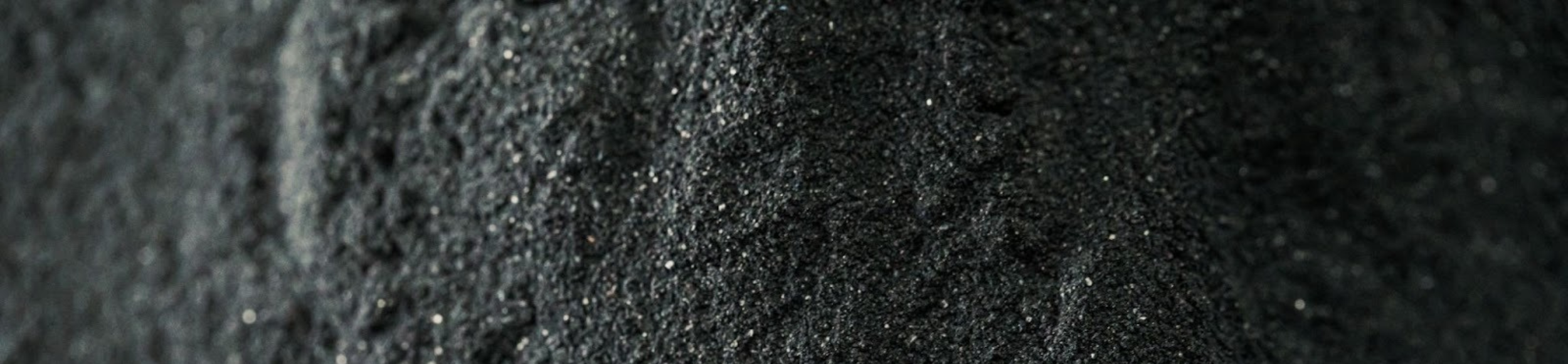
Though their energy storage activities are quickly growing, Redwood’s primary business model is procuring end-of-life lithium ion batteries. Redwood processes these batteries to recover metals like copper, steel, and aluminum, as well as extracting calcined metal concentrate (CMC), a high-quality component used to make cathode active material (CAM) for new batteries. CMC is a valuable material — in fact, it accounts for 60% of the cost of creating new batteries. Redwood is currently constructing a new building where they will use their recycled metals to create CAM to sell directly to battery manufacturers.
What is the recycling process to extract usable materials from used batteries?
The first step is collection. Redwood’s upstream customers are mostly businesses, such as EV and e-bike manufacturers. Recycling EV batteries and selling extracted components is profitable enough that Redwood is actually able to pay its suppliers for old batteries.
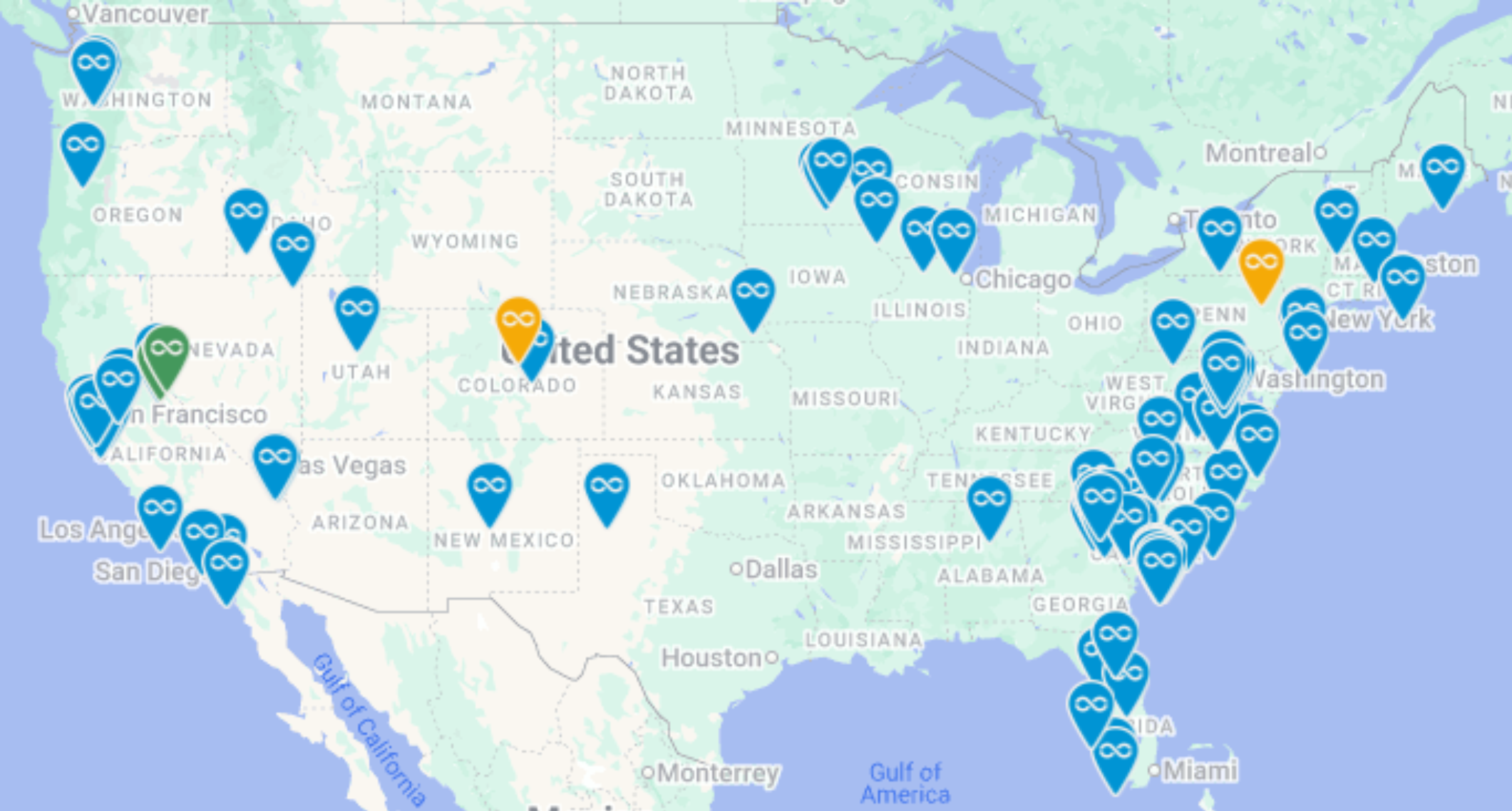
They also have over 100 collection bins around the US that allow them to accept some smaller, consumer-scale Li-ion batteries from the general public. These collection bins are un-manned, and users are provided static-resist bags for their waste batteries before placing them in the bin. Once the bins are full, they are shipped to the Sparks facility for processing. Upon request, Redwood will also host collection events, often in partnership with schools, rotary clubs, and local governments.
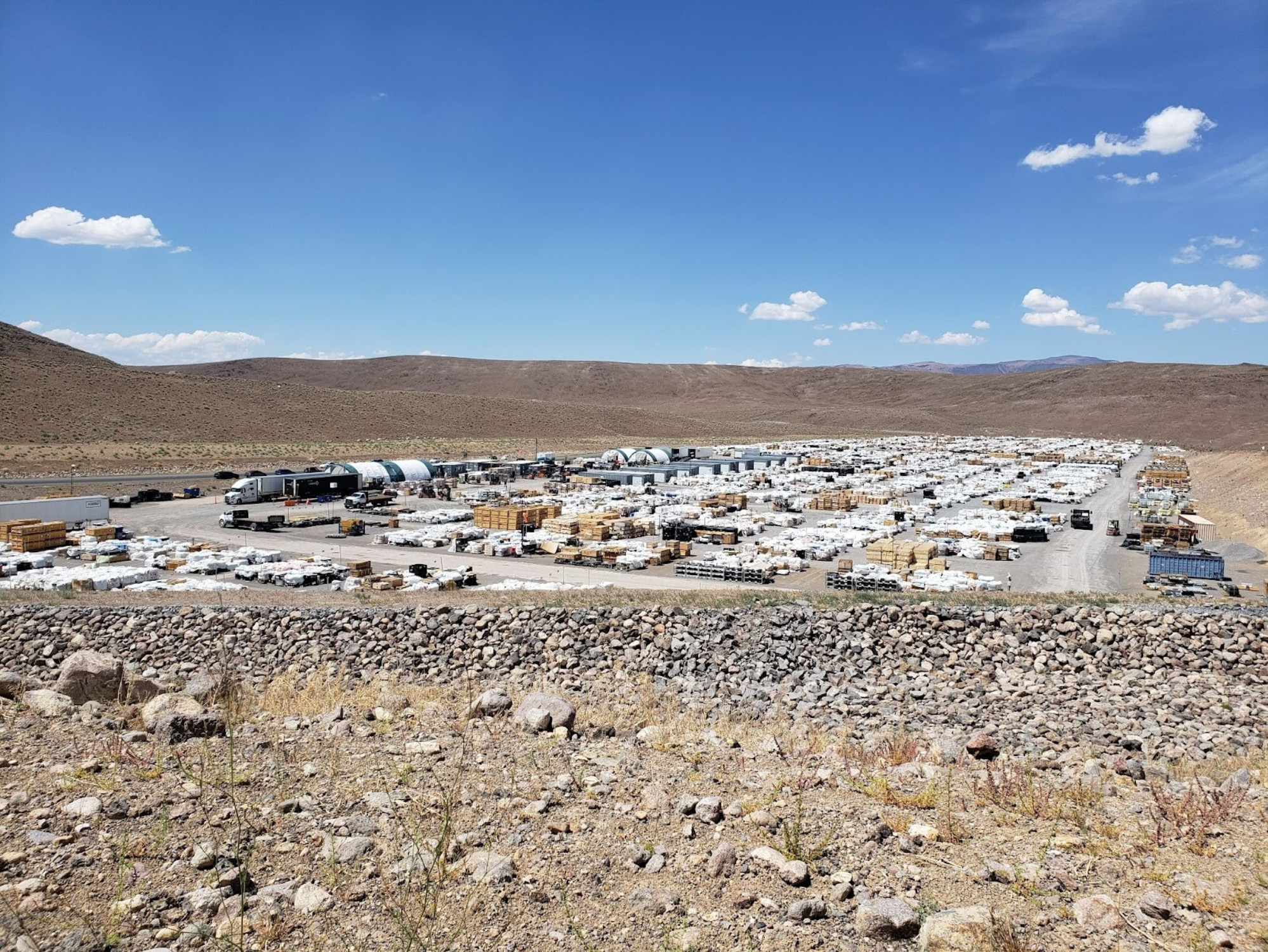
Batteries shipped to the Sparks facility are entered into the company's tracking system and given asset tags. They are then stored outside in a 30-acre field where they are kept at safe distances from each other, never far from a water dunk tank to avoid dangerous thermal events. Though individual fires from old Li-ion batteries are an inevitable hazard in this industry, these storage tactics minimize the risk of small fires escalating into major events, which may result in employee injury or loss of assets. Weather events are also not a major concern for outdoor storage in Sparks, as they only receive 2 inches of rainfall per year and temperatures rarely exceed 90 degrees.
Batteries are not picked for processing by the “first-in, first-out” philosophy that the recycling industry typically follows—rather, they're viewed as “ingredients” for making CMC (the intermediate material needed to make CAM). For example, if Redwood has a customer who needs a certain % ratio of nickel to cobalt in their CAM, Redwood will choose battery feedstock from the storage field that will help them create CMC material to the right specifications. Redwood sells 35 different CMC products to manufacturers, like Panasonic, for example.
Once a batch of batteries has been chosen, they are loaded into the kiln where heat is applied to discharge the batteries and make them safe for shredding. This heat-driven calcination process is unique to Redwood, and allows them to avoid "wet shredding" their batteries, which they claim is more resource intensive and creates lower quality CMC. As opposed to high-temperature methods like pyrometallurgy where material is burned at over 1000 degrees Fahrenheit, Redwood’s kiln only heats the batteries to 100s of degrees and does not evaporate any of the material, including the most heat sensitive element, lithium. The kiln, also known as a or rotary calciner, spins much like much like a cement mixer, so in addition to rendering the material inert, the battery cells are mechanically broken up. The cell casings are made of steel, so they are removed from the other materials using screens and magnets to be sold for recycling.
A state-of-the-art air abatement system attached to the kiln catches volatile organic compounds (VOCs) and fluorine gasses produced during this process. Material caught in the filters can be sold to nickel smelters and refined. The air that leaves the abatement system doesn't have any detectable levels of VOCs or fluorine gasses, according to a lifecycle analysis published in Nature, and the whole facility has emissions similar to that of a small hospital. Redwood is only required to hold a class 2 minor emitter air permit.
The next destination for the material is mechanical separation. In a containment room, the material is sent through large shredders, resulting in metal powder. The metal powder is then dissolved into a solution, and using selective precipitation, the lithium is separated out from a nickel/cobalt mixture. These two separate products are dried by passing through a filter press, and then they're finally ready to be sold to manufacturer customers. Some by-products that aren't useful for new battery manufacturing are also recovered and sold, such as gypsum, which is a low-value material used in drywall.
And that is how lithium batteries are recycled.
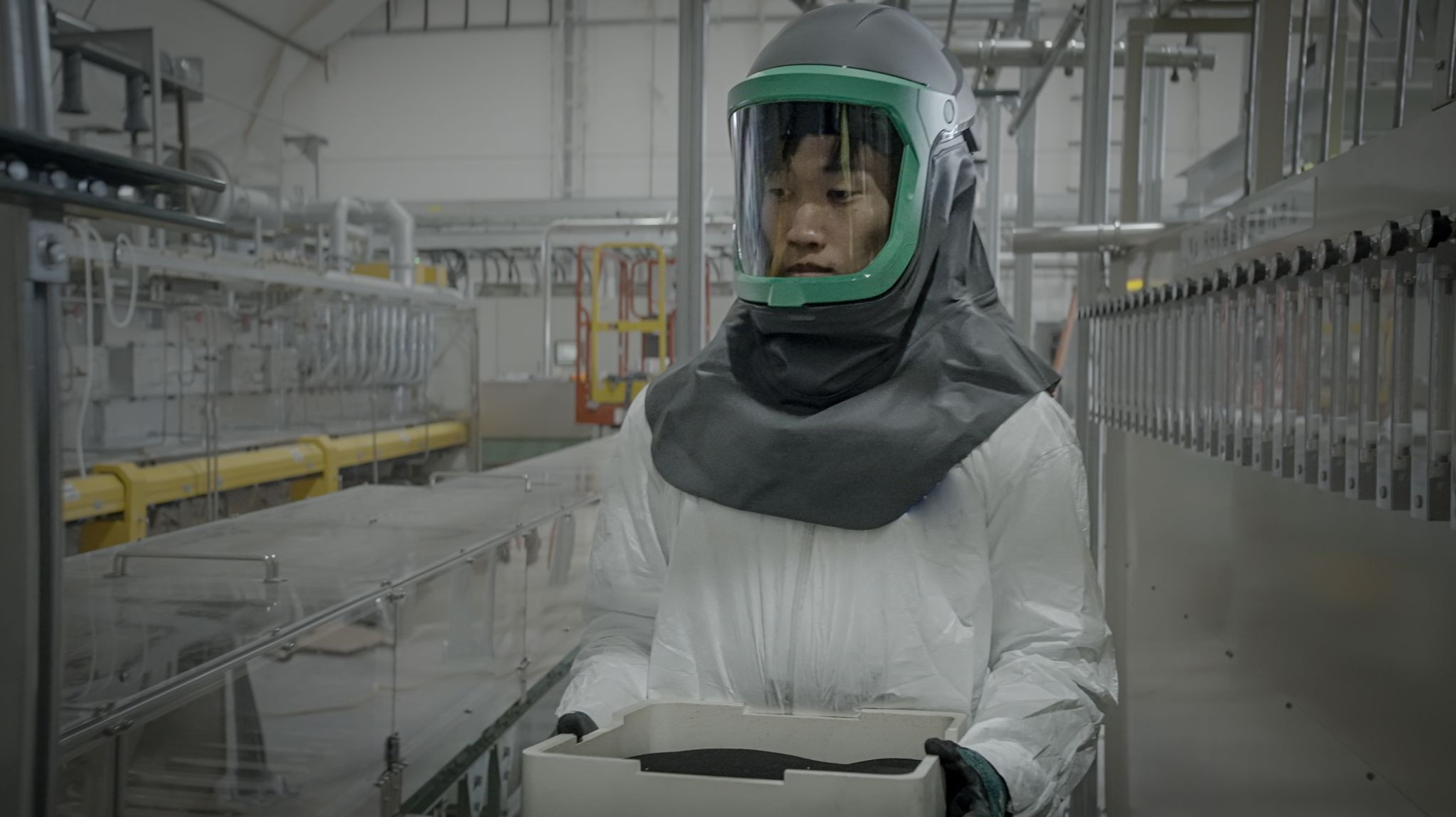
About Redwood Materials: Employees
Redwood employs a total of 1200 people globally, 900 locally in Nevada. Redwood states that its average wage is 35 dollars per hour, and some entry positions just require forklift experience and a commercial driver license (CDL) – the rest can be taught in-house.
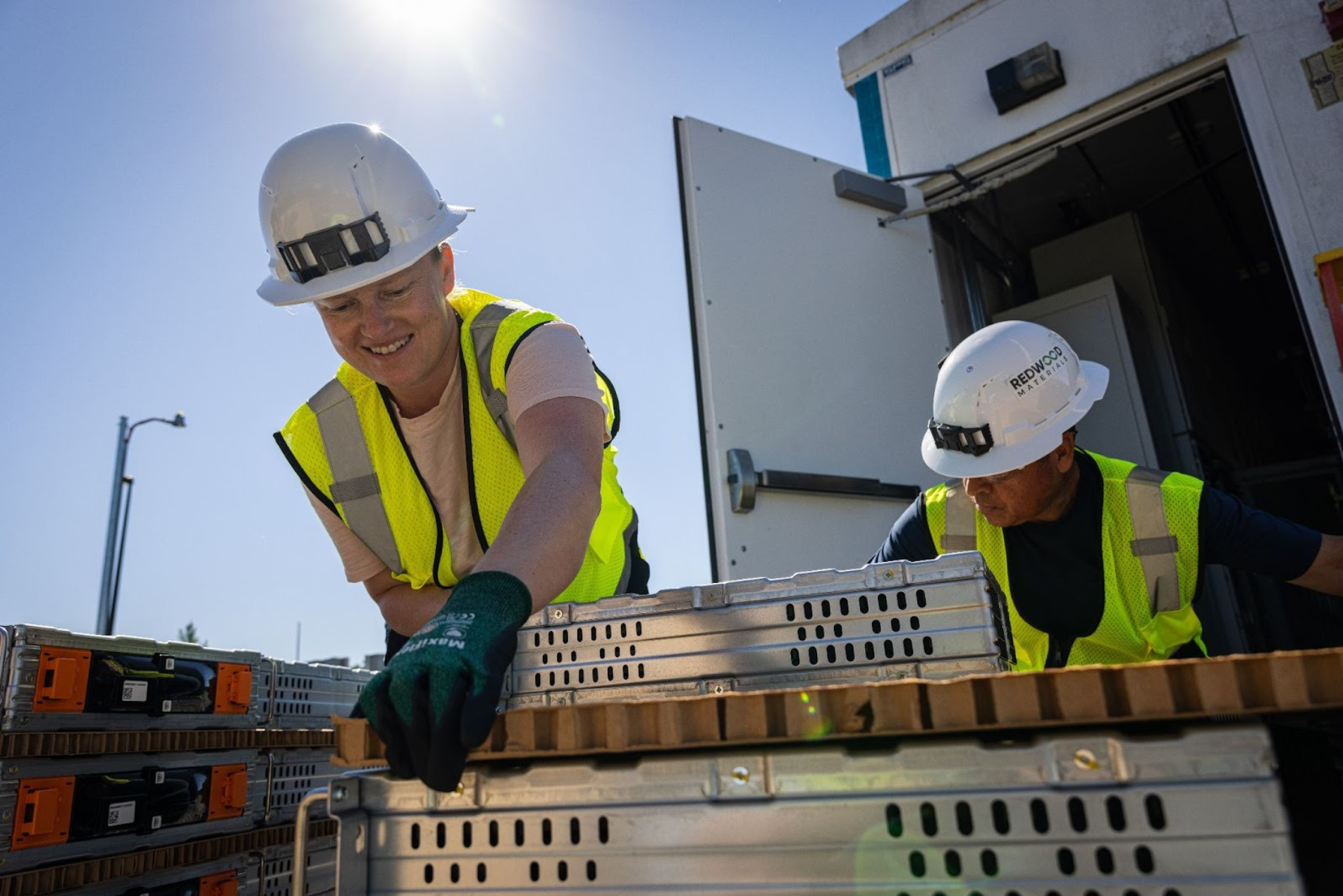
About Redwood Materials: Locations
Nevada: Redwood Materials is headquartered in Carson City and performs its battery recycling activities in Sparks.
South Carolina: Redwood operates a facility in Ridgeville, South Carolina which specializes in the recycling of inert pre-market materials, which are materials that don't make it through the entire battery manufacturing process. They perform their main lithium ion battery recycling activities in Sparks, Nevada, and the material arrives to the Ridgeville facility in sheets much like what you see in the photo below:

San Francisco: Redwood’s San Francisco site is used for research and development for their lithium ion battery reuse and recycling activities that take place in Nevada and South Carolina.