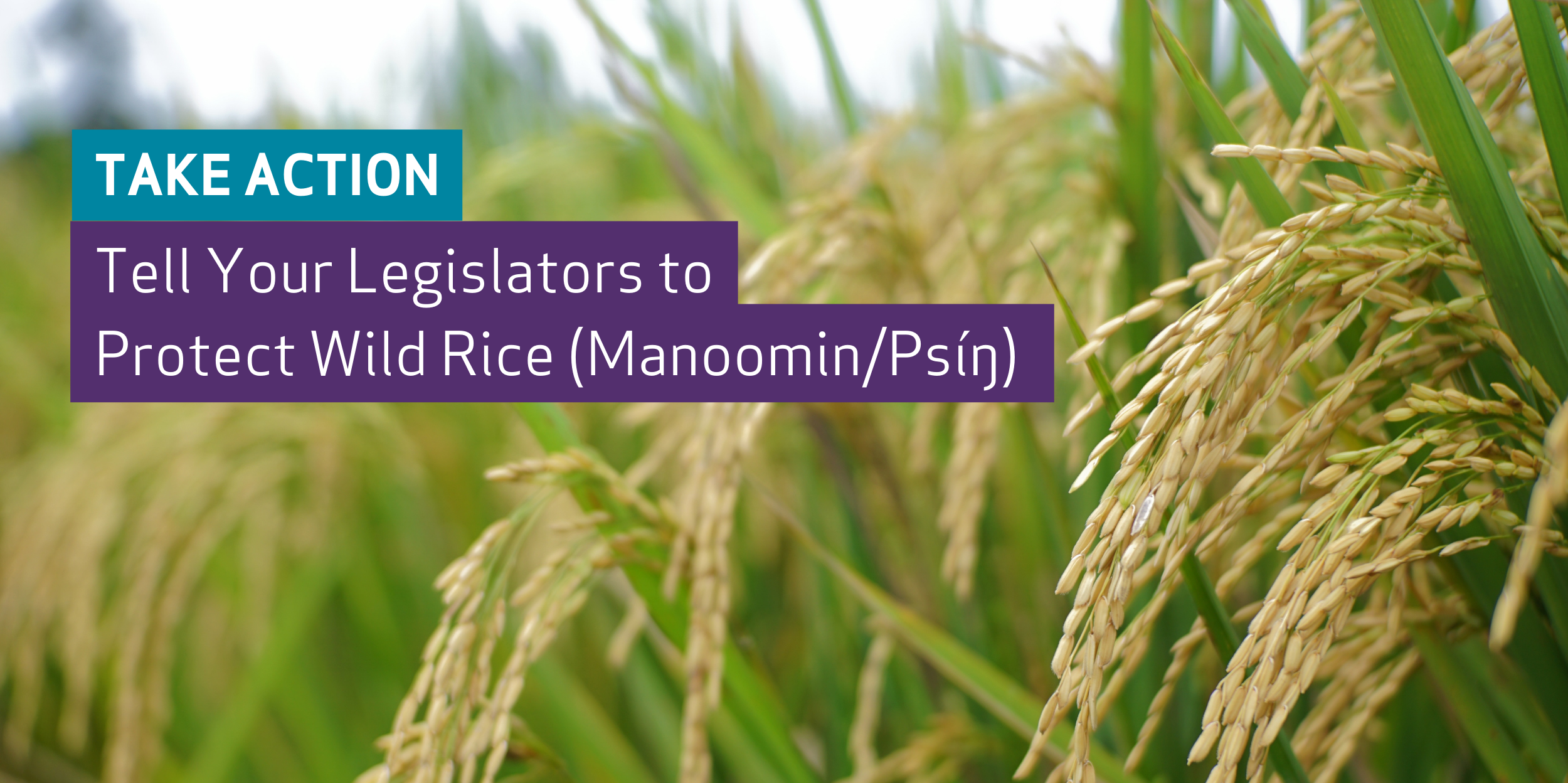
We stand with our partner, Rise & Repair, in their work to pass key policies that seek to increase statutory protections around natural stands of uncultivated wild rice (known as manoomin to the Anishinaabeg and psíŋ to the Lakota and Dakota). Wild rice, Minnesota’s State Grain, is not only a unique and invaluable part of Minnesota’s ecosystems, it's also a cultural epicenter (and treaty-protected food) of the Ojibwe and Dakota communities residing within our borders.
The State of Minnesota must recognize the inherent right of wild rice to exist and thrive. This grain plays a vital role in water health: thriving in low-sulfate environments, it can signal when contamination is high. Its presence signals healthy wetlands and it contributes to the ecosystem with its seeds, supplying food for many species.
Most importantly, manoomin/psíŋ is of great cultural significance for the Ojibwe and Anishinaabe people. You can learn more about this rich history HERE.
Contact your legislators today. Tell them to protect uncultivated wild rice in Minnesota.