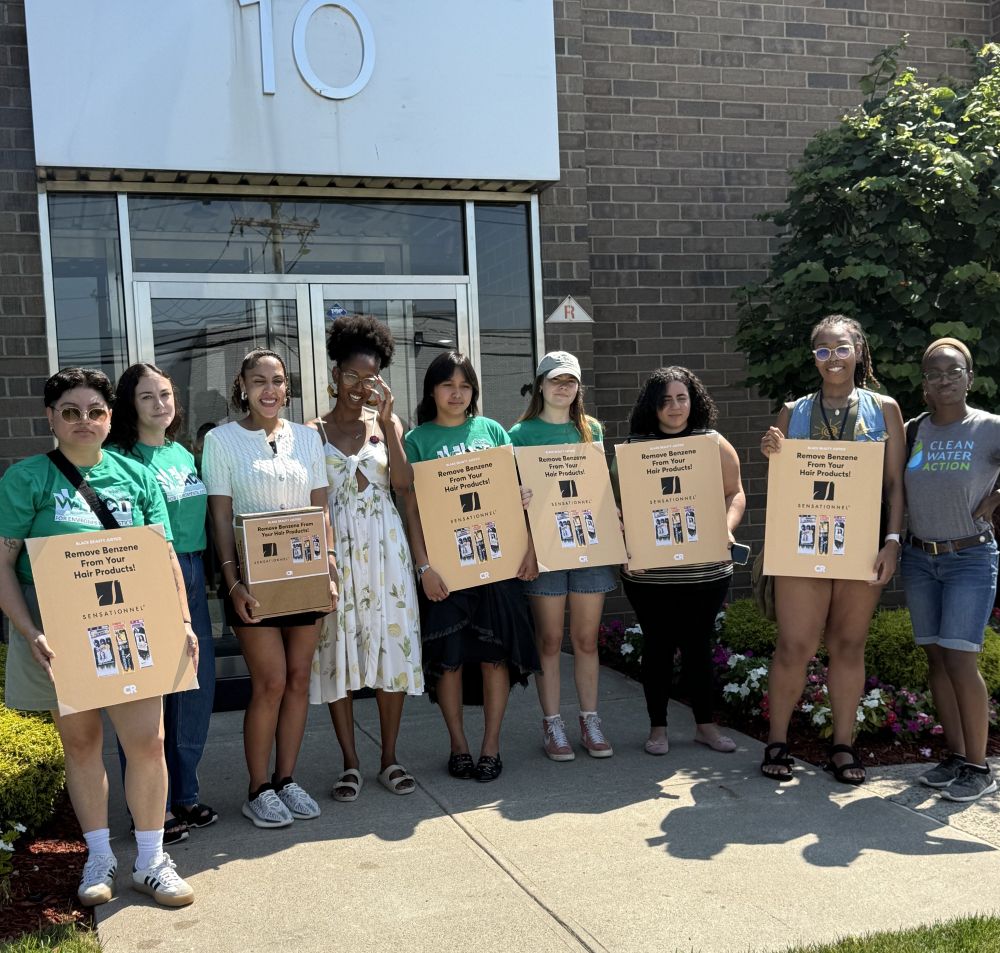
For generations, beauty has been a site of resilience and creativity for Black women—a way to affirm identity, carry culture, and express pride in who we are. But too often, the very products we use to celebrate ourselves have been laced with chemicals that harm our bodies. On July 31st, 2025, Clean Water Action joined Consumer Reports, WEACT for Environmental Justice, and Oh My Heavenly Hair for a powerful Beauty Justice Day of Action in celebration of International I Love Braids Day. What could have simply been a day of cultural celebration became a bold demand for accountability, health, and justice.
In New Jersey, Clean Water Action’s Lead Environmental Justice Organizer, X Braithwaite, and Zero Emissions and Warehouse Organizer, Tolani Taylor, stood with community members to usher this call. Both organizers brought their deep experience in fighting for environmental justice to the forefront, uplifting the truth that beauty justice is not separate from other justice struggles—connecting to the same systemic forces of environmental racism, corporate negligence, and disregard for Black lives. Their leadership reflected what this movement is all about: protecting the health and dignity of our communities through direct action and collective power.
“I am glad I was able to show up and be engaged on this important issue amongst other amazing beauty justice advocates,” stated Tolani Taylor. “Although my organizing work is primarily focused on diesel pollution from ports and warehouses, it intersects with beauty justice . Beauty products made by companies like Sensationnel, marketed to mostly black women, are the same beauty products that are being manufactured and shipped across the world, in and out of our ports, loaded and transported on diesel trucks to warehouses before finally arriving to consumers. The act of transporting these goods using these trucks is extremely polluting and health harming , especially for the mostly black and brown communities that live closest to ports and warehouses. I see this is a double environmental injustice especially for black women and taking a stand to spread awareness is the only way to make it stop.”
In February, Consumer Reports—a nonprofit, independent organization dedicated to truth, transparency, and consumer safety—released a groundbreaking investigation that found benzene, a known carcinogen, in synthetic braiding hair. This is yet another painful reminder of how little oversight exists to protect us.
Consumer Reports’ testing found benzene in 3 out of 10 synthetic braid samples—despite the fact that benzene is banned in personal care products because of its link to acute myeloid leukemia and other severe health impacts. These are products designed to be worn close to the scalp, often for weeks or months at a time, by those of us who rely on braids not just for style, but for care and convenience. The risk is not abstract—it’s intimate, it’s prolonged, and it’s disproportionately carried by Black women and girls.
That’s why we showed up on International I Love Braids Day. We brought over 20,000 petition signatures and people power straight to Sensationnel’s doorstep, demanding that they, along with Magic Fingers, remove benzene and other toxic chemicals from their products immediately. This is more than a petition delivery—it’s a declaration that our health is non-negotiable.
Expanding the Fight for Beauty Justice
The fight for beauty justice doesn’t end with braiding hair—it extends across the industry. Black women continue to be disproportionately exposed to toxic chemicals in products marketed to us, from braids to relaxers to everyday personal care items.
Take Dark & Lovely, for example. Once seen as a staple brand, it is now facing a class action lawsuit for the harmful effects of its relaxers. The Environmental Working Group (EWG) gave some of its products the worst possible scores, citing high risks of hormone disruption, reproductive toxicity, and immune system harm. A study from Boston University found that Black women who used relaxers more than twice a year for five years or longer had a 50% greater risk of uterine cancer. These findings are not isolated—they are the direct result of companies prioritizing profit over our health.
When we speak of beauty justice, we are naming the injustice of being forced to choose between cultural expression and safety, between embracing who we are and protecting our health. We are calling for an end to the targeting of Black women with toxic products while corporations hide behind branding and empty promises.
Building Power Through Policy
Alongside community action, we are pushing for systemic change. In New Jersey, S4477/A5954, is a powerful step forward. This bill would ban carcinogens, reproductive toxicants, volatile organic compounds, and flame-resistant chemicals from hair products. It also acknowledges what we already know: toxic exposure in beauty products is not just a consumer issue—it’s an environmental justice issue.
“This bill is crucial to not only banning toxins in hair and beauty products, but also spreading awareness about the reality of these commonly used products. Rightfully so, Prime Sponsors Senate Majority Leader Ruiz and Senator Burgess along with Assemblywomen Speight and Morales focus on the harms of the products’ ingredients, not brand or product names, thereby shining light on this issue often hidden by industry,” said Clean Water Action’s Environmental Advocate, Molly Cleary.
But legislation alone is not enough. We need enforcement, transparency, and the courage to hold companies accountable. We need to keep showing up, raising our voices, and refusing to let corporations write off our health as collateral damage.
This Is What Justice Looks Like
International I Love Braids Day is more than a celebration of culture. This year, we turned it into a day of action—a reminder that our fight for beauty justice is about love, health, and dignity. It’s about protecting the next generation so that Black girls can wear their braids, relaxers, twists, or natural curls without fear of what’s seeping into their bodies.
This is what justice looks like: communities coming together to demand more, to expect better, and to refuse to settle for harm disguised as beauty.
Join Us in Action
You can be part of this movement:
- Send a message to L’Oréal, the parent company of Dark & Lovely, calling on them to remove toxic chemicals from their relaxers and prioritize the health of Black women and girls.
- Support NJ Bill S4477 by contacting your legislators and demanding stronger protections against toxic chemicals in beauty products.
- Share this message with your networks to spread awareness and build momentum for beauty justice.
Together, we are more than consumers—we are advocates, protectors, and leaders. When we say that Black women deserve safe beauty, we mean it. And when we stand together, change is not only possible—it’s inevitable.
For more information about Clean Water Action’s Beauty Justice campaign, contact X Braithwaite.


